
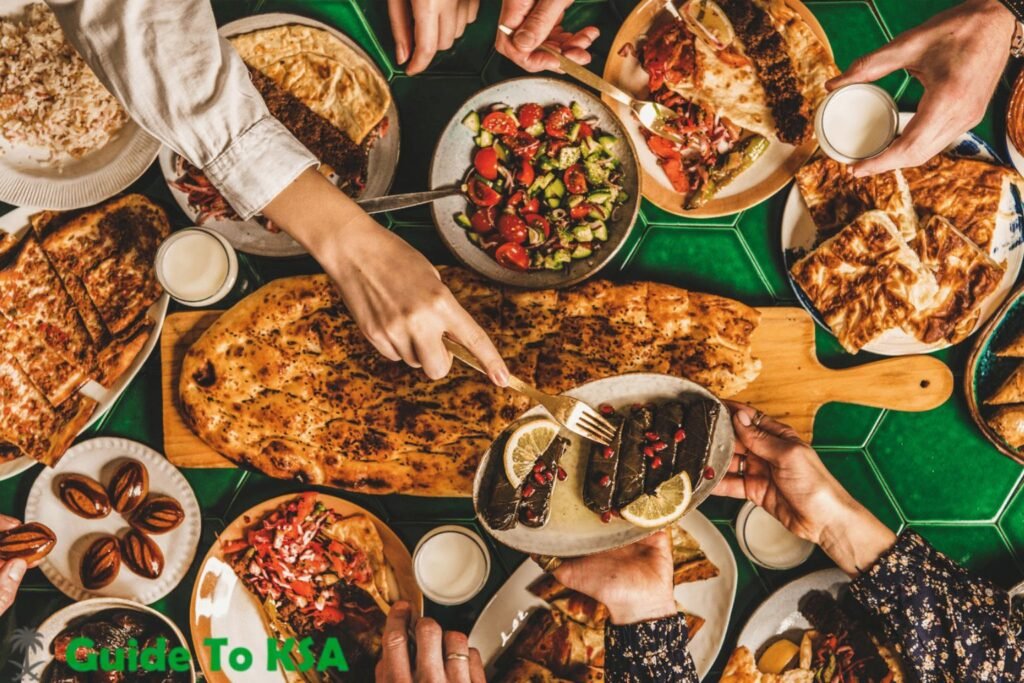
A Simple Guide to Ramadan Meal Times in Saudi Arabia
During Ramadan in Saudi Arabia, daily life follows a different rhythm—one shaped by prayer, fasting, and shared moments around food. Two times define every day of the holy month: Iftar, when the fast is broken at sunset, and Suhoor, the pre-dawn meal before fasting begins again.
If you’re living in the Kingdom, visiting during Ramadan, or simply trying to understand how the month works, this guide explains Iftar time and Suhoor time in Saudi Arabia in a clear and practical way.
What Is Iftar Time?
Iftar is the meal eaten at sunset to break the day’s fast. In Saudi Arabia, Iftar begins exactly at Maghrib prayer time, when the sun has fully set.
What Happens at Iftar in Saudi Arabia?
As Maghrib approaches, you’ll notice a visible pause across cities:
- Roads become quieter
- Shops slow down
- Families gather at home
- Mosques prepare for prayer
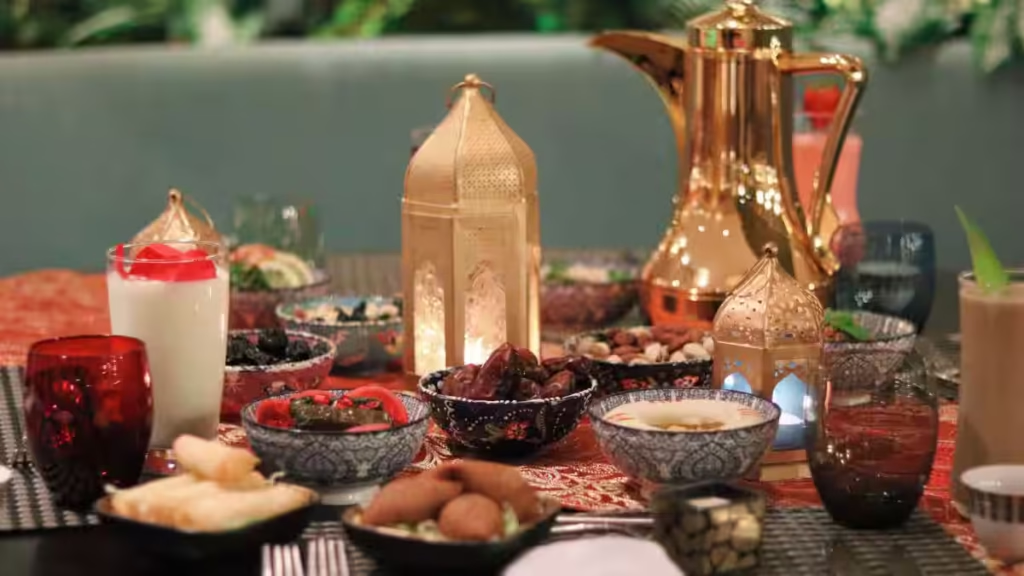
When the adhan for Maghrib is called, Muslims break their fast—most often with dates and water, following the Sunnah of the Prophet Muhammad ﷺ. Many people then pray Maghrib before returning to eat a full meal.
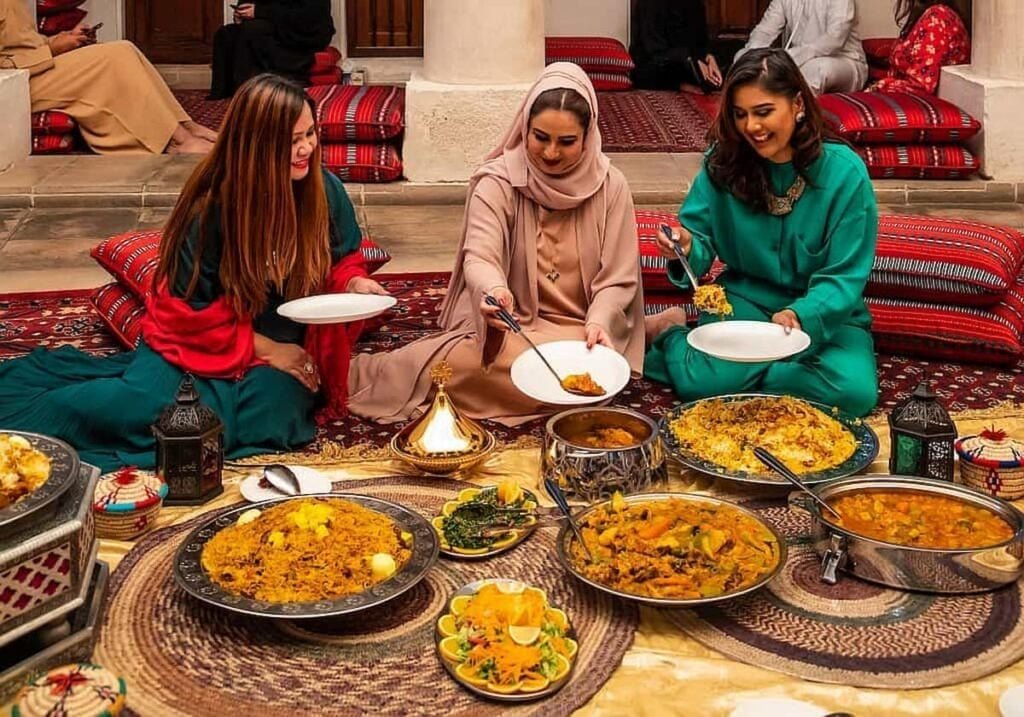
Iftar in Saudi Arabia is not just about food. It’s a shared moment. Neighbors exchange plates, mosques distribute meals, and public iftar tables appear in many areas to ensure no one is left without food.
What Time Is Iftar in Saudi Arabia?
Iftar time changes daily because it depends on sunset.
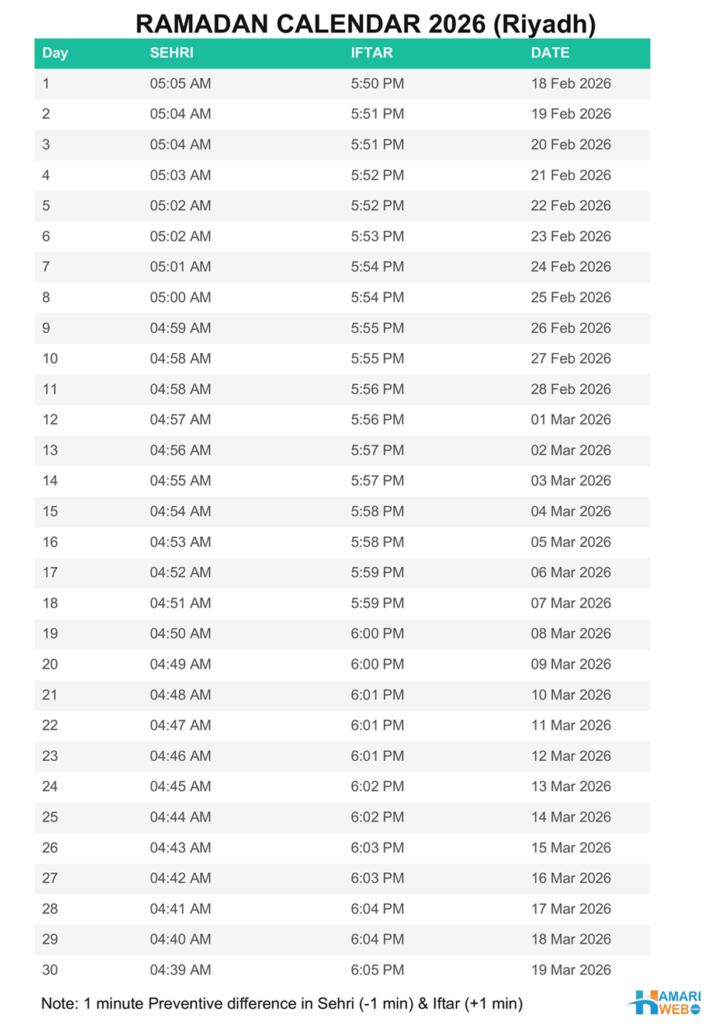
- In Riyadh, Iftar may be around 6:15 pm early in Ramadan and later as the month progresses
- In Jeddah, Makkah, and Madinah, times differ slightly due to location
- In northern or southern regions, sunset varies by a few minutes
📌 Always follow the local prayer timetable for your city in Saudi Arabia, as even small differences matter when fasting.
What Is Suhoor Time?
Suhoor is the meal eaten before dawn, just before the fast begins again.
It’s quieter than Iftar, calmer, and more practical in nature. While Iftar feels social and lively, Suhoor feels steady and focused—meant to prepare the body and mind for a full day of fasting.
In Saudi homes, Suhoor may be:
- A light meal at home
- A shared family gathering
- A simple plate eaten half-awake before Fajr
Some restaurants and cafés in major cities stay open late specifically for Suhoor during Ramadan.
When Does Suhoor End?
Suhoor ends at Fajr time, when dawn begins.
Islamically, fasting starts when:
“The white thread of dawn becomes distinct from the black thread of night.” (Qur’an 2:187)
In practical terms:
- You can eat and drink until the Fajr adhan
- There is no requirement to stop early
- Most people finish eating a few minutes before Fajr to be safe
In Saudi Arabia today, people rely on official prayer calendars and mosque announcements, not visual observation of the sky.
What Do People Eat for Suhoor in Saudi Arabia?
Suhoor meals are chosen to be filling and hydrating. Common options include:
- Eggs and flatbread
- Yogurt, laban, or milk
- Rice dishes like kabsa or bukhari (especially in family gatherings)
- Dates and fruit
- Tea or water
The goal is to stay energized and avoid excessive thirst during the day.
Iftar vs Suhoor: The Difference at a Glance
| Iftar | Suhoor |
|---|---|
| At sunset (Maghrib) | Before dawn (Fajr) |
| Breaks the fast | Prepares for the fast |
| Social & lively | Calm & quiet |
| Dates & water first | Filling, sustaining foods |
| Followed by prayer | Ends before prayer |
Why These Times Matter in Saudi Arabia
In Saudi Arabia, Ramadan reshapes daily schedules:
- Working hours are reduced
- Schools adjust start times
- Cities come alive after sunset
- Nights become the social window
Knowing Iftar and Suhoor times helps you:
- Plan meals correctly
- Avoid accidentally breaking or invalidating a fast
- Respect local customs if you’re a visitor
- Move comfortably within Ramadan’s rhythm
A Rhythm That Repeats Every Day
From Iftar at sunset to Suhoor before dawn, Ramadan in Saudi Arabia follows a cycle that balances faith, food, and community. It’s a rhythm that slows the day, fills the night, and brings people together—whether at home, in mosques, or across public tables.
Understanding Iftar time and Suhoor time isn’t just about the clock. It’s about understanding how Ramadan is lived in the Kingdom.

