
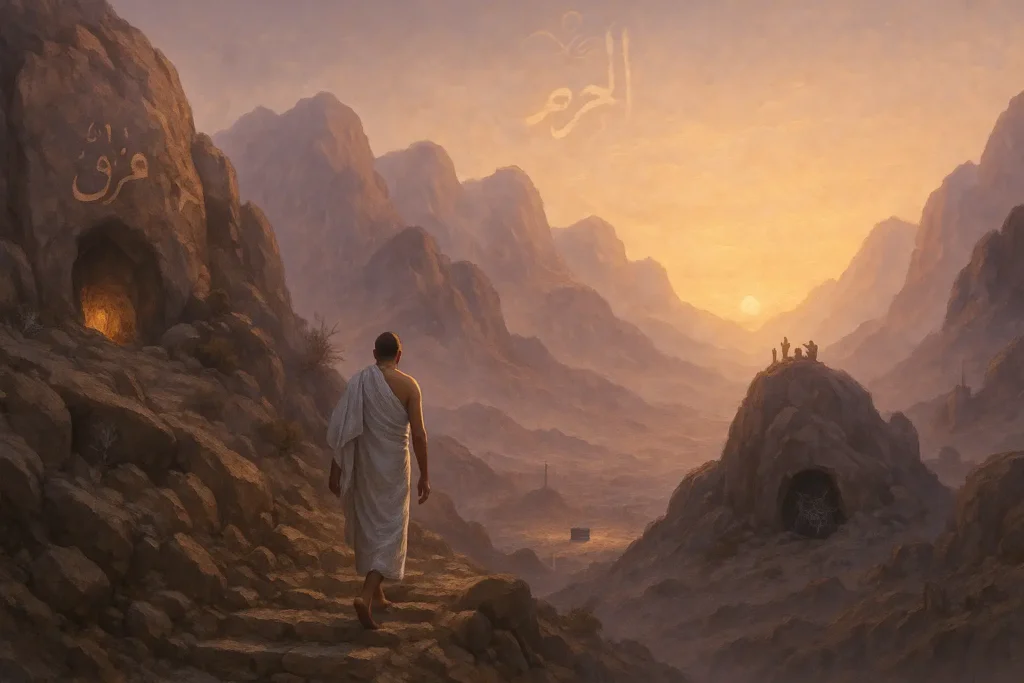
Makkah isn’t just the holiest city in Islam — it is also a cradle of history, natural heritage, and spiritual stories etched into the rugged terrain of its surrounding mountains in Makkah. For centuries, these mountains have watched over the city, witnessed pivotal moments in history, and inspired the hearts of pilgrims and locals alike.
Let’s take a deep and captivating journey through the seven landmark mountains of Makkah — their history, location, and the remarkable stories each one holds.
1. Jabal Abu Qubays — The First Mountain on Earth
📍 Location: East of the Grand Mosque (Masjid al-Haram)
Long before Makkah grew into a thriving city, Jabal Abu Qubays stood as one of its earliest natural monuments. Some historians describe it as the first mountain laid on earth, a symbolic beginning of creation in the region.
In pre-Islamic times, the mountain was known as Al-Amīn because it was believed to house the Black Stone (Hajr Aswad) before it was installed in the Kaaba.
The name has echoed through ages — from ancient tribal poets to modern scholars — as a silent guardian overlooking the Kaaba and shaping the landscape of Islam’s holiest city.
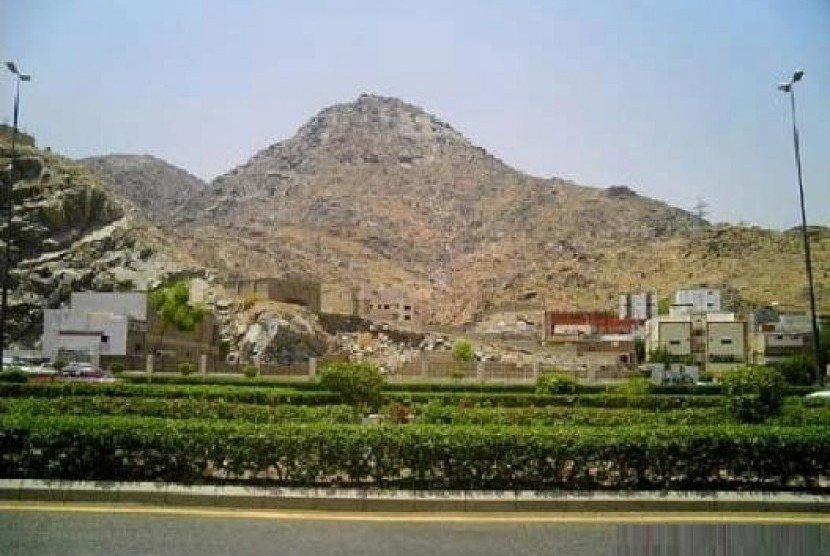
2. Jabal Khandama — Makkah’s Scenic Watchtower
📍 Location: Just behind Jabal Abu Qubays
Rising behind Abu Qubays, Jabal Khandama offers some of the most breathtaking panoramic views of Masjid al-Haram and the sprawling city below.
Though less famous than others in religious texts, its vantage points have made it a favorite for historians, photographers, and those seeking to reflect upon the city’s ancient beauty.
The mountain’s slopes once hosted traditional homes and neighborhoods before city expansion transformed the surroundings.
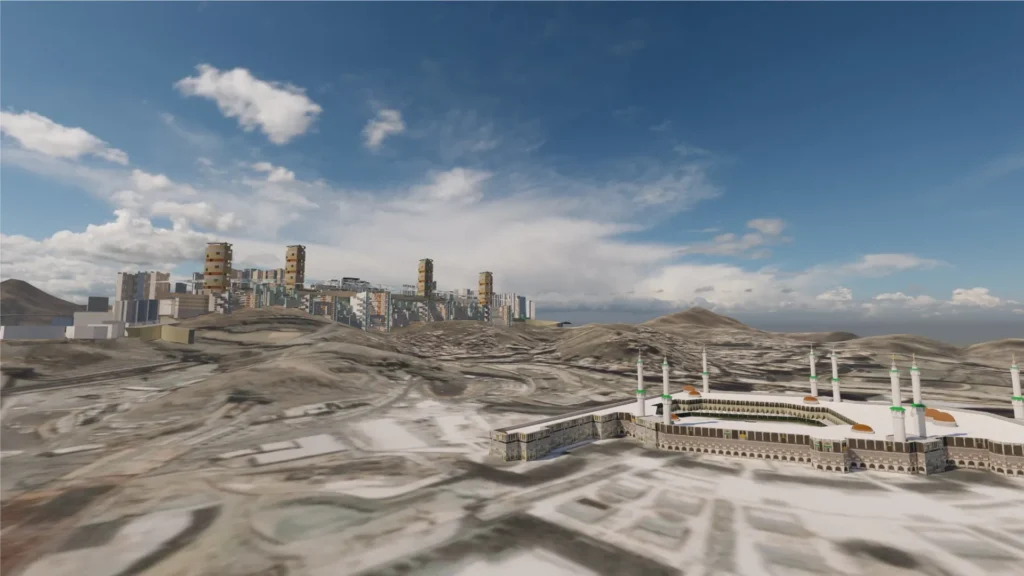
3. Quaiqian Mountain (Jabal Hindi) — Echoes of Ancient Battles
📍 Location: West of Masjid al-Haram
Also known as Jabal Hindi, Quaiqian Mountain holds a name wrapped in vivid history. Its title is said to come from the clashing of swords — possibly during battles between ancient tribes like Jurhum and Katura — that once echoed around its rocky faces.
Before the sweeping expansions of the Grand Mosque, it stood firmly on the western edge of the holy sanctuary, a constant witness to the city’s evolving destiny.
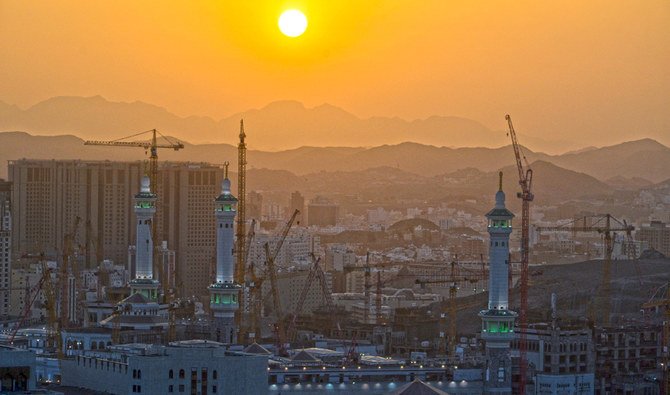
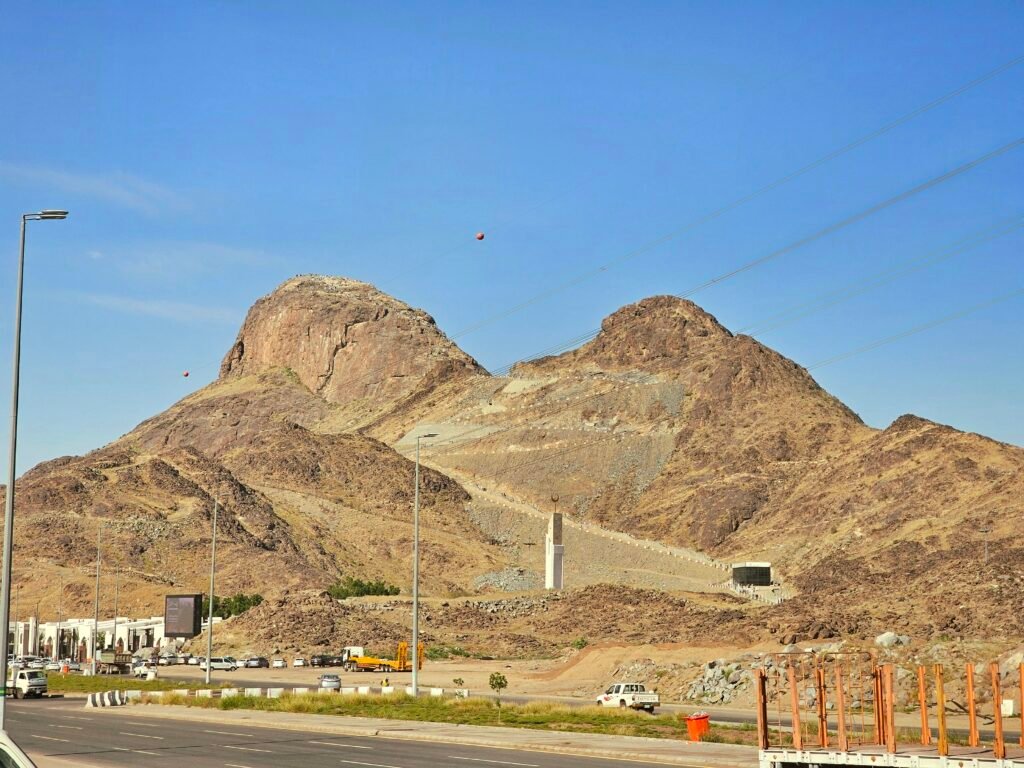
4. Jabal Al-Nour — The Mountain of Divine Light
📍 Location: Northeast of Makkah, about 4 km from Masjid al-Haram
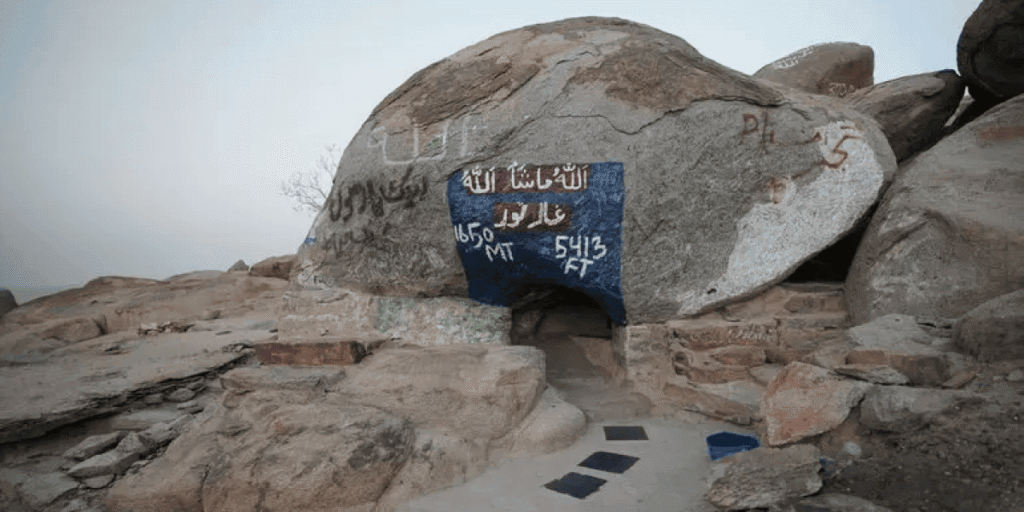
Perhaps the most spiritually significant of them all, Jabal Al-Nour (Mountain of Light) is home to the Cave of Hira, where Prophet Muhammad ﷺ received the first revelation of the Qur’an from Angel Jibreel (Gabriel).
This moment marks the beginning of Islam — a transformative divine encounter that changed the course of human history.
Though ascending the mountain is steep and demanding, many pilgrims make the journey for the spiritual reward and to stand where the first light of revelation pierced the silence of the desert.
5. Jabal Thawr — Refuge During Migration
📍 Location: South of Makkah, roughly 3 km from Masjid al-Haram
Jabal Thawr is inseparable from one of the most profound stories in Islamic history — the Hijrah (Migration) of Prophet Muhammad ﷺ to Madinah.
When enemies plotted to take his life, the Prophet and his loyal companion Abu Bakr As-Siddiq took refuge in the Cave of Thawr, hiding for several days as they planned their safe departure.
Today, the mountain remains a symbol of trust in Allah, courage, and the beginning of a new chapter for the Muslim community.
6. Jabal Omar — From Mountain to Modern Landmark
📍 Location: West of Masjid al-Haram
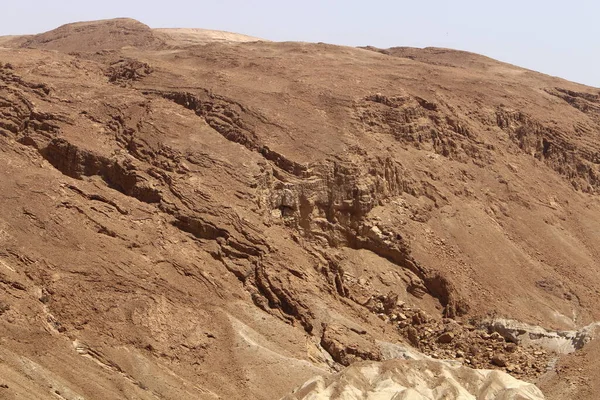
Once a natural part of Makkah’s mountain ring, Jabal Omar has evolved into a contemporary landmark. Its ancient slopes have been developed into what is now known as the Jabal Omar project — a bustling area of hotels, residences, and facilities serving pilgrims due to its proximity to the Grand Mosque.
Though its natural form has changed, the name persists as a bridge between Makkah’s rich past and its thriving present.
7. Mount Thabir — Echoes of Ibraham’s Devotion
📍 Location: East of Makkah, opposite Jabal Al-Nour
Nestled opposite the Mountain of Light stands Mount Thabir — a mountain woven into tradition with a touching story of sacrifice.
Some historical narrations suggest this is where the ram sent by Allah came down to be sacrificed in place of Prophet Ibrahim’s son, Ismail (peace be upon them). This event is commemorated each year during Eid al-Adha — a lesson in obedience, devotion, and faith.
The mountain is also divided into zones like Thabir Ghinaa and Thabir Al-Nakhil (Palm Thabir), showing the diverse landscape even within a single mountain.
Why These Mountains Matter
These seven mountains are much more than rocks and hills. They are living witnesses to faith, history, and human resilience. From divine revelation and prophetic refuge to tribal legends and city evolution, these peaks enrich the soul of Makkah and connect worshippers with stories that stretch across millennia.
Conclusion
Whether you’re a pilgrim drawn by spiritual heritage, a history lover fascinated by ancient tales, or a traveler seeking the essence of Makkah’s landscape — these mountains offer an unforgettable journey through time and faith.

