
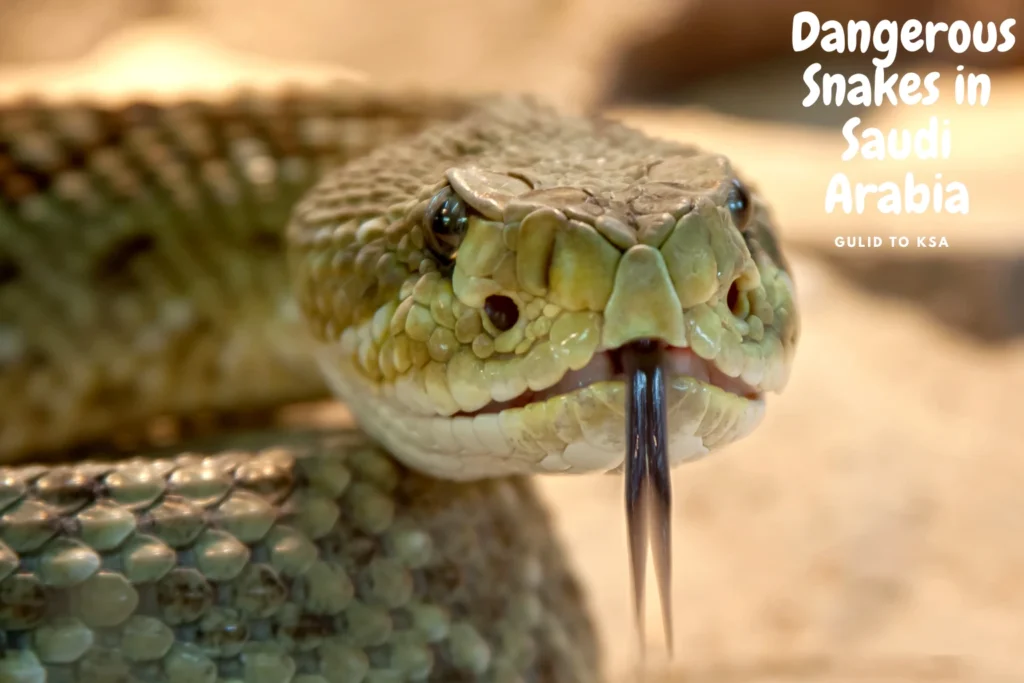
Saudi Arabia’s vast deserts and rocky mountains are home to a variety of dangerous snakes—some harmless, others deadly. While most dangerous snakes avoid human contact, encounters do happen, especially in rural or desert areas. Knowing which snakes pose a real threat can help you stay safe. In this article, we’ll explore the top venomous snakes in Saudi Arabia, how to identify them, their venom type, and essential safety tips.
Arabian Cobra (Naja arabica)
- Region: Asir, Jizan, and southwestern areas
- Venom Type: Neurotoxic – affects the nervous system
- Risk: High – a small dose can cause respiratory failure
- Behavior: When threatened, it flares its hood and may strike
This is one of the most dangerous snakes in the Kingdom. Although sightings are rare, the Arabian cobra is a powerful species that can be aggressive if provoked.
Horned Viper (Cerastes gasperettii)
- Region: Central and eastern deserts
- Venom Type: Hemotoxic – causes tissue damage and bleeding
- Risk: Moderate to High – responsible for many snakebites
- Behavior: Buries in sand and strikes quickly when disturbed
Also called “Umm Junaib,” this viper is perfectly camouflaged in the sand, making it difficult to spot. It has small horns above its eyes and delivers a painful, sometimes deadly bite.
Saw-Scaled Viper (Echis carinatus)
- Region: Riyadh, Al Baha, and Rocky Mountain areas
- Venom Type: Hemotoxic – can cause internal bleeding and death
- Risk: Extremely High – most deadly snake in the region
- Behavior: Aggressive; makes a “sizzling” sound when threatened
This snake is responsible for the majority of snakebite deaths in Saudi Arabia. That’s small but extremely dangerous snakes. Seek medical help immediately if bitten.
Desert Black Snake (Walterinnesia aegyptia)
- Region: Central and northern Saudi Arabia
- Venom Type: Neurotoxic – fast-acting venom
- Risk: High – one of the most toxic snakes in the region
- Behavior: Shy but dangerous when provoked
Also known as the black desert cobra, it’s a silent and deadly hunter. Although not aggressive, its venom can shut down the nervous system within hours.
Burrowing Asp (Atractaspis engaddensis)
- Region: Underground or near construction sites
- Venom Type: Cytotoxic and Cardiotoxic – damages tissues and affects the heart
- Risk: High – can cause heart failure
- Behavior: Unusual sideways strike, even from tight spaces
These dangerous snakes are rarely seen. It can bite without fully opening its mouth, often catching victims off guard.
Additional Dangerous Snakes in Saudi Arabia 2026
To make this guide more complete and authoritative, here are more venomous snakes found in Saudi Arabia that travelers and residents should be aware of:
Arabian Horned Viper (Cerastes arabicus)
Region: Rub’ al Khali (Empty Quarter), Najran
Venom Type: Hemotoxic
Risk Level: High
Identification: Prominent horns above eyes, sandy coloration
Often confused with the Horned Viper (Cerastes gasperettii), this species is specifically adapted to the extreme desert conditions of southern Saudi Arabia. It hides beneath loose sand and strikes rapidly when stepped on.
Arabian Carpet Viper (Echis coloratus)
Region: Western Saudi Arabia, Hejaz Mountains
Venom Type: Potent Hemotoxic
Risk Level: Extremely High
This viper is closely related to the saw-scaled viper and is responsible for severe envenomation cases in mountainous areas. Its bite can cause:
- Internal bleeding
- Kidney damage
- Blood clotting disorders
It produces a rasping sound by rubbing its scales together before striking.
Sinai Desert Cobra (Naja haje arabica)
Region: Northwestern Saudi Arabia
Venom Type: Neurotoxic
Risk Level: Very High
A close relative of the Arabian cobra, this cobra can grow larger and deliver significant venom doses. It raises its hood when threatened and may strike repeatedly if cornered.
Glossy-bellied Racer
Region: Eastern Saudi Arabia
Venom Type: Mild venom (rear-fanged)
Risk Level: Low to Moderate
Other Less Dangerous Snakes You May Encounter
- False Cobra (Rhagerhis moilensis): Mimics real cobras but is only mildly venomous
- Sand Boa, Arabian Cat Snake, and other local species are mostly non-lethal but should still be avoided
Signs of a Venomous Snakebite
- Severe pain and swelling at the bite site
- Nausea, vomiting, or dizziness
- Bleeding, difficulty breathing, or muscle weakness
- Rapid heartbeat or fainting
Important: Do not wait for symptoms to worsen. Seek medical help immediately!
First Aid Tips for Snake Bites
- Stay calm and keep the affected area still
- Do NOT cut, suck, or apply ice to the wound
- Remove tight clothing or jewelry near the bite
- Immobilize the limb and keep it below heart level
- Go to the nearest hospital immediately
Snakebite Treatment in Saudi Arabia
Saudi Arabia has antivenom for all major venomous snakes, including:
- Arabian cobra
- Saw-scaled and horned vipers
- Desert black snake
- Burrowing asp
Tip: Always carry emergency numbers when camping or hiking in remote areas.
Stay Safe: Prevention is Better Than Cure
| Situation | Safety Tip |
| Hiking or camping | Wear boots and long pants |
| Working in farms/desert | Check under rocks and debris |
| Exploring at night | Use a flashlight to check your path |
| Encountering a snake | Do not panic—move away slowly |
| Children at play | Keep them supervised in wild areas |
Final Thoughts
The dangerous snakes are an important part of Saudi Arabia’s ecosystem. With awareness, preparation, and respect for nature, you can reduce the risk of an encounter turning deadly.
If you live in or travel through the desert, knowing how to identify and respond to venomous snakes could save your life—or someone else’s.

